Compare cargo space by the objects and seats that must coexist
A cargo-volume figure does not tell you whether a particular stroller, case or mobility aid fits through the opening. The seating arrangement matters too. A useful cargo check uses representative objects, safe loading guidance and the exact configuration, rather than assuming the largest published volume describes the way you will travel.
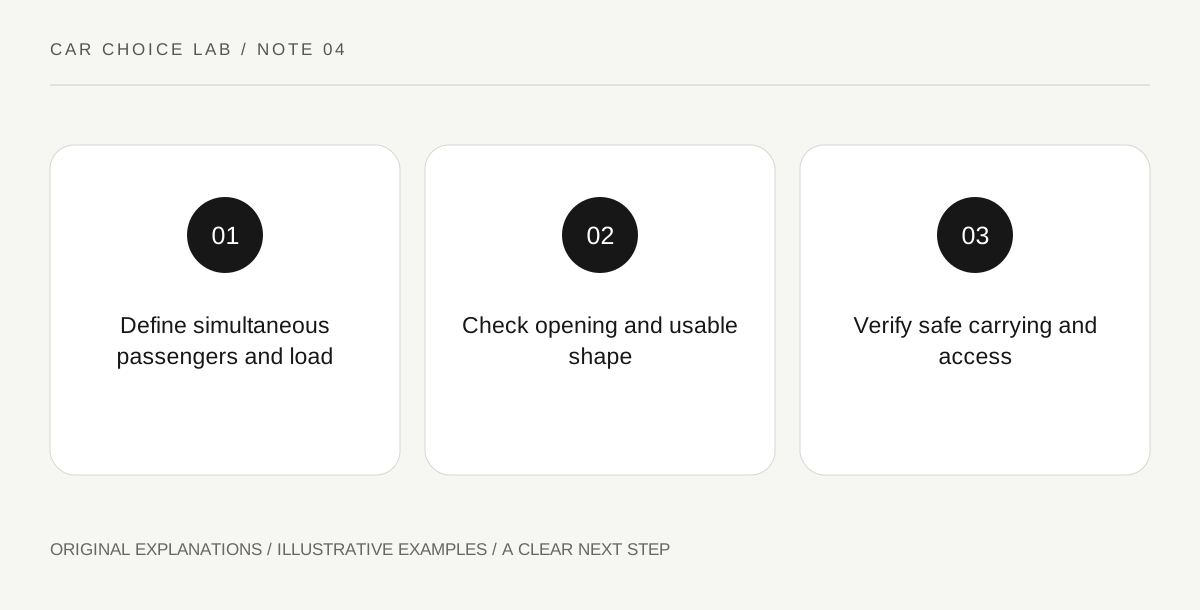
Original explanatory diagram. Read the full method and limitations below.
Define the load with the required seats in use
List the objects that travel together and the passengers who need seats at the same time. A cargo figure with rear seats folded may be irrelevant when those seats are occupied. Record the largest item's dimensions and whether it can be safely folded or divided according to its own instructions. Keep required equipment intact; do not plan to dismantle a mobility aid or child item in a way its maker does not permit. The goal is a realistic load scenario. A collection of small soft bags behaves differently from one rigid box even when their nominal volumes look similar.
Check the opening before the interior
Measure or inspect the hatch or trunk opening, sill, wheel-arch intrusions and usable floor shape. A large cavity can still have a narrow entrance. Consider the height to lift an item and whether you can handle it comfortably. Use a permitted representative fit check when practical, protecting the vehicle and following seller rules. Do not infer lifting suitability from a photograph. A person may prefer a lower opening or a different layout for access. If specialist equipment or disability-related needs are involved, seek appropriate assessment rather than treating a tape measure as the complete answer.
Keep restraint and loading limits separate from volume
Space does not establish payload capacity or a safe way to secure objects. Follow the vehicle's manual and loading information for the actual configuration. NHTSA's tire and loading resources emphasize vehicle-specific information. A roof box or hitch carrier can add its own limits and requirements, and should not be assumed compatible because there is physical room. Do not block visibility, obstruct restraints or leave heavy items unsecured to make a test fit. The shopping task is checking whether the load can be carried appropriately, not proving that everything can be forced into the cabin.
Compare the everyday loading process
Think about groceries, rain, a crowded parking space and the trip home, when packing may be less orderly. Ask whether the tailgate can open in your garage and whether a split seat arrangement preserves needed passenger space. Keep convenience features separate from essential fit. A powered hatch does not solve an opening that is too small. Record the seating state and exact items used in a test so another candidate is compared fairly. The useful outcome is confidence about a real load scenario, with unresolved safety or compatibility questions referred to the manufacturer or a qualified professional.
Think about access to the load once the car is packed. A bag containing necessary medication or a mobility accessory may need to remain reachable without unloading everything. Keep such access compatible with safe securing and the vehicle's instructions. The preferred arrangement is not always the one that maximizes volume. A practical fit check can reveal whether the shape supports the sequence of stops in your ordinary trip.
An illustrative luggage check
A family compares cars with all required passenger seats upright. Their largest rigid case fits one cargo opening more easily even though another car advertises a larger folded-seat volume. They check the manual's loading and securing guidance rather than treating physical fit as proof that the load is safe.
Practical checks
Optional checkboxes save only in this browser.
Questions that come up
Does more cargo volume guarantee a better fit?
No. Opening shape, floor layout and the objects' dimensions matter.
Can I use a roof carrier whenever the cabin is full?
Only after checking exact vehicle and carrier compatibility, limits and instructions. Space alone does not establish suitability.
References and scope
These sources support the factual background. Examples and exercises are original illustrative teaching material. References do not imply endorsement.
- NHTSA: TireWise — Vehicle-specific tire and loading information and maintenance needs.
- NHTSA: Adapted Vehicles — Personal fit and specialist assessment for adaptive driving equipment.