Compare auto loans using amount financed, APR, term and total cost
A payment is only one line of a loan offer. A longer term or a different amount financed can make two payments look similar while the obligations differ. A useful comparison keeps the purchase assumptions stable and reads the full borrowing terms, with current offers rather than rates remembered from an advertisement.
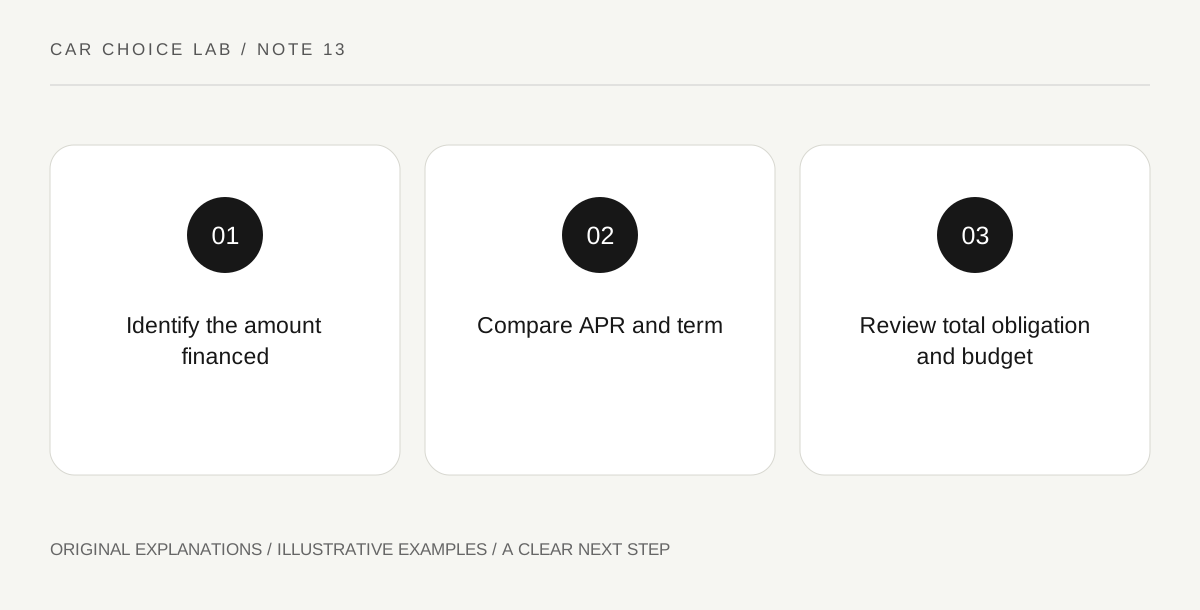
Original explanatory diagram. Read the full method and limitations below.
Start with the amount being borrowed
Identify the vehicle purchase amount, down payment, trade-in treatment and any added products included in financing. CFPB advises comparing the amount financed alongside rate, term and total cost. If two offers fund different amounts, label that difference before comparing APR. A lower rate on a larger loan does not automatically create a cheaper transaction. Keep taxes and fees visible where they are financed. Do not assume that an optional product costs only its cash price when borrowing also creates interest over time. Ask for a complete written offer and the relevant disclosures.
Use a simple table with one offer per column and the same row definitions. Leave a missing fee or condition blank and ask for it rather than using zero. A calculated total built on incomplete terms can look precise while being misleading. Keep the lender's disclosures alongside your summary so a shorthand entry can be checked. The worksheet helps understanding; the actual agreement determines the obligation you are considering.
Read APR and term together
APR helps describe borrowing cost, while the term determines how long payments continue. A longer term can reduce the monthly amount and increase total interest, depending on the offer. Compare actual current terms rather than a generic example. Ask whether the rate is fixed and whether fees or conditions affect the quote. This article does not recommend a personal term or establish what rate you should qualify for. Credit, lender criteria and circumstances differ. A clear comparison explains the tradeoff rather than treating the smallest payment or the lowest displayed percentage as the only decision.
Look at the full obligation and flexibility
Review total payments, payment timing, any final payment and the contract's relevant conditions. Ask about early repayment, late charges and any other term you do not understand. Do not infer a rule from another person's loan or assume every lender uses the same arrangement. Consider the total ownership budget, including insurance, maintenance, energy and registration, rather than fitting the loan payment into an otherwise empty monthly plan. A borrowing offer can be approved while still being unsuitable for your finances. Seek qualified independent advice when needed, especially if the decision is difficult to understand or strains essential spending.
Compare written offers before selecting one
Use the same vehicle transaction assumptions and record differences explicitly. A worksheet can help, but its calculation is only as accurate as the inputs. If the dealership changes the vehicle price or adds products when financing changes, request a revised breakdown. Do not sign under pressure because an unexplained offer is said to expire immediately. Read the final contract against the selected offer and retain copies. The useful outcome is an understood obligation and a deliberate choice. It is not guaranteed approval, a prediction of future resale value or a promise that refinancing will later solve an unaffordable loan.
An illustrative two-offer review
A buyer receives one offer with a shorter term and another with a smaller monthly payment over a longer term. She compares the same amount financed, APR and total payments, then checks the full ownership budget. She does not assume the smaller payment represents a lower overall cost or rely on future refinancing.
Practical checks
Optional checkboxes save only in this browser.
Questions that come up
Is the lowest APR always the cheapest complete deal?
Not if other terms or the amount financed differ. Compare the full transaction and borrowing obligation.
Can approval tell me the loan is affordable?
Approval reflects lender criteria, not a complete assessment of your priorities and essential spending. Review your own budget and seek independent advice if needed.
References and scope
These sources support the factual background. Examples and exercises are original illustrative teaching material. References do not imply endorsement.
- CFPB: Comparing Auto Loan Offers — APR, term, amount financed and total borrowing cost beyond monthly payment.
- Consumer.gov: Buying a Car — Budgeting for a vehicle and considering costs beyond the advertised price.