Evaluate a plug-in hybrid through the days you will actually charge it
A plug-in hybrid combines operating modes, so one headline efficiency number can obscure how you would use it. The useful comparison connects charging access, ordinary distance and gasoline operation. It does not assume that the presence of a plug guarantees lower cost or that a particular trip will remain fully electric.
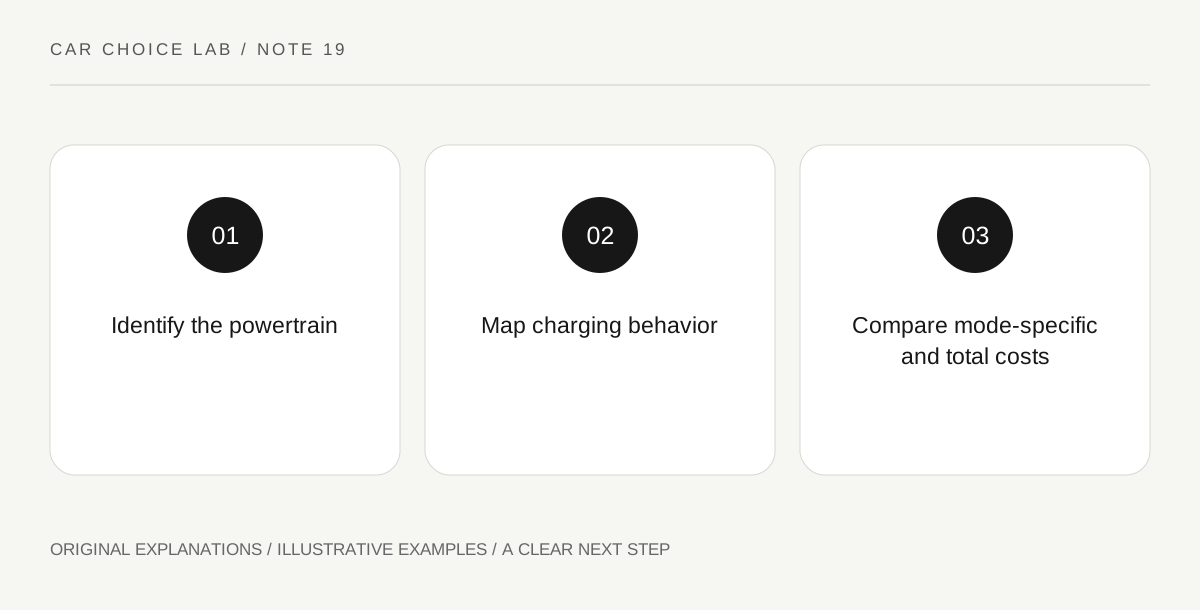
Original explanatory diagram. Read the full method and limitations below.
Distinguish a plug-in hybrid from a non-plug-in hybrid
Use the exact vehicle's official description. A plug-in hybrid can receive energy from external charging, while a conventional hybrid has a different operating arrangement. EPA's label explanation shows separate information for electric and gasoline-related operation. Do not combine every vehicle labeled hybrid into one category. Record the model year and powertrain because a model family may offer several versions. Keep manufacturer operating details available. Some conditions can cause the engine to run even when charge is available, so do not infer a universal all-electric behavior from the presence of a battery or a marketed range figure.
Map realistic charging days
Identify where charging is permitted and suitable, how often the car will be parked there and whether the arrangement is confirmed. A theoretical daily charging habit differs from one that fits an irregular schedule or shared parking. Use qualified electrical advice for a home setup and current provider information elsewhere. Do not assume a workplace charger will always be free or available. The purchase question is how often the vehicle is likely to benefit from its plug-in capability in your actual routine. Keep uncertain future access separate from an existing usable arrangement.
Read both sides of the energy label
EPA explains that PHEV labels describe different operating information rather than one universal MPG result. MPGe is an energy-equivalent measure, not the electricity price you will pay. Read gasoline operation and electric consumption with the label's assumptions and the exact vehicle's information. A household that charges regularly may have a different energy-cost pattern from one that rarely plugs in. This article does not calculate a personal blended result or promise a payback. Use consistent mileage and current energy-price scenarios, and keep the proportion of driving in different modes as an explicit assumption rather than a hidden optimistic input.
Consider what happens on a week when charging is less frequent than planned. A second scenario can show whether the vehicle still fits without relying on a perfect habit. This is not a prediction that you will fail to charge; it is a way to make the tradeoff visible. Keep the assumptions consistent across candidates and do not combine the best electric result from one scenario with the lowest costs from another.
Compare the complete ownership choice
Review purchase price, finance, insurance, maintenance, charging setup and practical space alongside energy. A PHEV may fit a particular pattern, but it is not automatically the best compromise for every shopper. Compare a suitable conventional hybrid, gasoline or battery-electric option where relevant, using exact configurations and current information. Keep incentives separate until verified for the transaction. Ask which daily inconvenience or uncertainty each option creates as well as which benefit it offers. The useful outcome is a conditional comparison tied to your charging behavior, not a claim that two power sources eliminate every tradeoff or guarantee the lowest running cost.
An illustrative charging-pattern comparison
A buyer has confirmed suitable charging three nights a week but uncertain access on other days. He reads the PHEV's official electric and gasoline information and compares scenarios using that actual pattern. He does not assume every commute will be electric or use the highest displayed efficiency number as his personal annual result.
Practical checks
Optional checkboxes save only in this browser.
Questions that come up
Does a plug-in hybrid always stay electric while charged?
Do not assume so. Operating behavior depends on the exact model and conditions. Read manufacturer information.
Can MPGe be used as my actual fuel bill?
No. Cost depends on energy consumption, prices and how the vehicle operates in your routine.
References and scope
These sources support the factual background. Examples and exercises are original illustrative teaching material. References do not imply endorsement.
- EPA: Plug-in Hybrid Vehicle Label — PHEV electric and gasoline operation, MPGe and label assumptions.
- DOE AFDC: Charging Electric Vehicles at Home — Home charging, electrical assessment, suitable equipment and local installation requirements.
- FuelEconomy.gov: Compare Cars Side by Side — Comparing the exact model-year and powertrain configuration using official estimates.